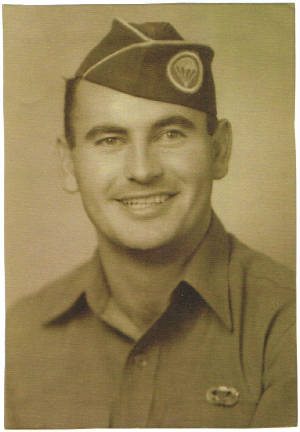
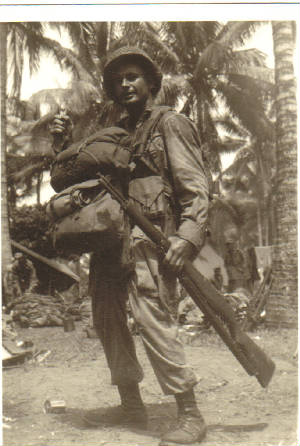
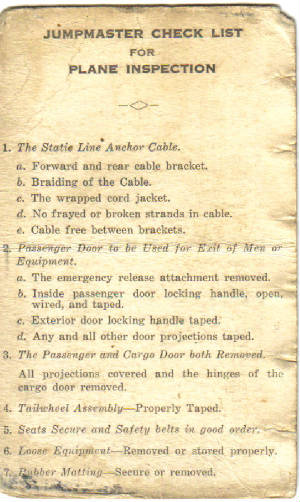
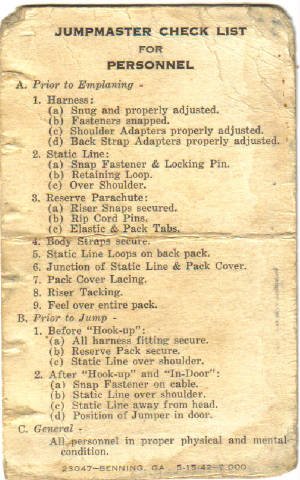
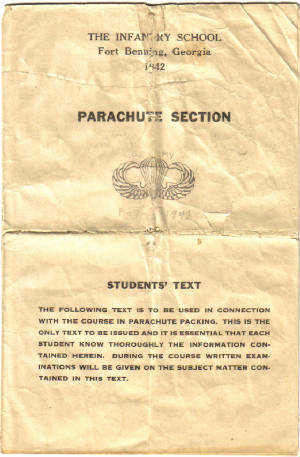
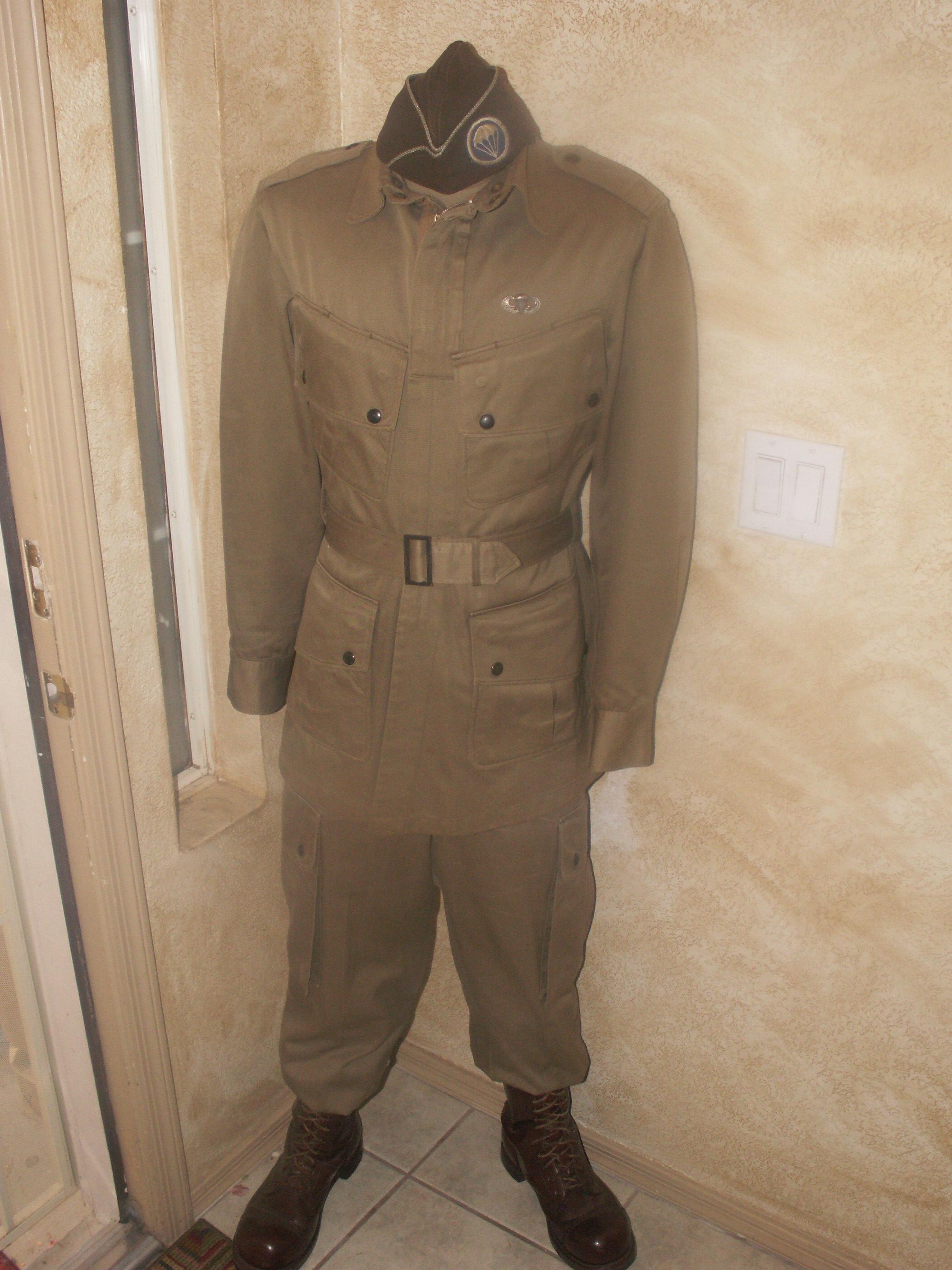
The 503rd Parachute Infantry Regiment was activated at Fort Benning Georgia on March 2, 1942. Mr.
Clearwater was with the regiment from the beginning and went with the regiment overseas first via the Panama Canal zone where
the regiment was joined by the 501st Battalion which then became 2/503.
They then proceeded to Queensland Australia for further training. After this time they moved on to
Port Moresby New Guinea and made a succesful combat jump on the Nadzab Airodrome on the N.E. coast. This jump was personally
supervised by General MacArthur. The regiment then moved out to the Markham Valley and was relieved on September 19, 1943.
They returned to Port Moresby then to Queensland and were joined there by the 462nd FA Battalion
on March 29, 1944. They remained here for 6 months and during this time they were joined by the 161st Airborne Engineers forming
a Regimental Combat Team.
They moved to New Guinea where elements performed several combat patrols in the Hollandia area.
They were assigned to Task Force Cyclone and made combat jumps on Noemfoor Island, which was much
needed as a base for AirCorps operations as the Japanese had partially constructed 3 airfields there.
Kamiri Airfield was captured immediately and additional troops were dropped and some landed by boat.
On D+4 the 2nd Battalion made an amphibious assault on the west coast and seized Namber Airstrip. They forced the Japanese
inland and surrounded them on hill 380 and destroyed them on August 15, 1944. The remainder of the regiment captured Kornasoren
Airodrome and drove the enemy away from Kamiri to hill 670 where the combined infantry and artillery reduced the enemy position.
Mr. Clearwater took R&R on Noemfoor Island after this action. The 503rd was then assigned to
Western Visayan Task Force for the invasion of Mindoro. They made an amphibious assault on San Jose on December 15, 1944 and
quickly seized their objective and established a perimeter.
On February 16,1945 they made their most famous jump-Corregidor. 2 Battalions made the jump while
the other made an amphibious landing where they formed into small combat teams to attack Malinta Hill. Airborne elements took
the top of the hill and the Amphibious troopers took the base. Mr. Clearwater made the jump and landed in a shell hole breaking
his leg. He did battle with a Japanese machine gun crew which was set up in a hole just 25 yards from his location.
He intermittantly fired his Thompson Submachine gun at this crew through the night, finally killing them with handgrenades
shortly before being rescued.
On the next day, the 17th, the 503rd and the 34th Infantry began a systematic reduction of the Japanese
positions. Typical of the Japanese, only 19 prisoners were taken of an original force of around 5000. During the seek
and destroy missions the Japanese were holed up in caves, tunnels and coastal positions. On February 26th the Japanese defenders
exploded a huge ammo magazine below Monkey Point, killing many of their own and a few U.S. personnel.
They returned to Mindoro and then moved to Negros Island on 4/9 to reinforce the 40th Infantry. They
took hill 3155 on 4/15 and endured very tough fighting until 4/22. The original Japanese resistance ended early in June but
mop-up continued until August. The Japanese surrendered on 8/15/45.
The regiment was then deactivated at Camp Anza, California on 12/24/45.
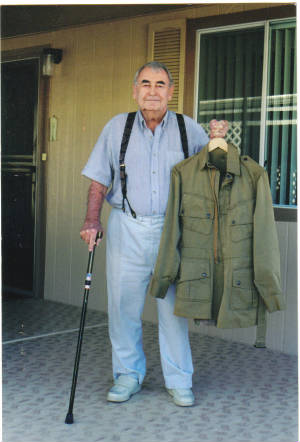
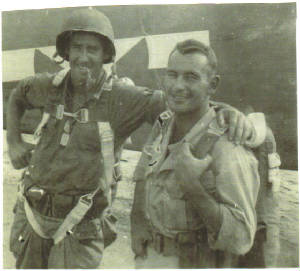
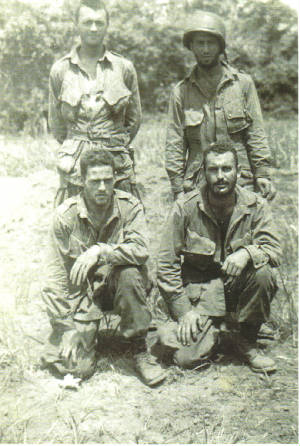
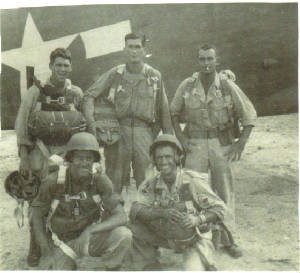
Mr. Clearwater resides in Mesa, Arizona and is a very nice, bull of a man as you can see by
the pictures.